
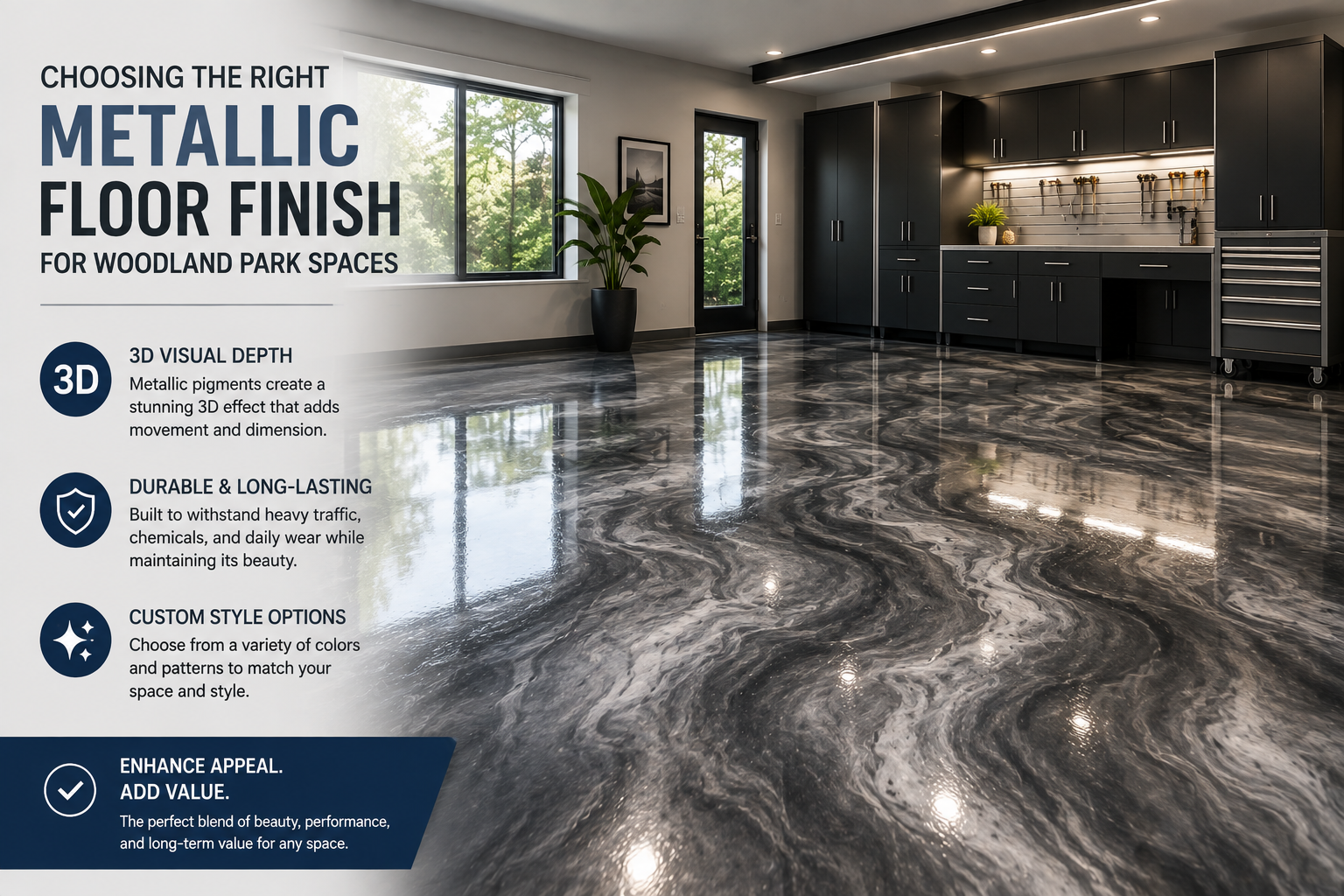
Metallic floor coatings are known for their flowing patterns, reflective depth, and one-of-a-kind appearance. Instead of creating a flat, uniform surface, metallic pigments move through the coating to form swirls, clouds, waves, and marbled effects. This makes the system suitable for property owners who want a concrete floor that feels more decorative than a standard solid-color finish.
However, the right metallic floor finish should not be selected by appearance alone. Property owners in Woodland Park must also consider the room’s purpose, existing concrete condition, moisture level, lighting, cleaning needs, and expected traffic. A finish that performs well in a finished basement may not provide the same results in a garage exposed to snow, wet tires, and winter debris. Understanding these local and practical factors makes it easier to choose a floor system that offers both visual appeal and dependable performance.
Start With the Purpose of the Space
The first step is to consider how the room will be used. A finished basement may need a warm, decorative surface that complements furniture and interior colors. A showroom may require a high-gloss finish that reflects light and draws attention to displayed products. Garages and workshops, on the other hand, may need stronger resistance to abrasion, stains, and vehicle fluids.
A professional trusted Metallic epoxy flooring services should evaluate the actual demands of the space before recommending a coating system. This includes examining foot traffic, furniture movement, vehicle use, chemical exposure, moisture, and cleaning requirements. Choosing the finish based on daily use can reduce premature wear and help the floor maintain its appearance for longer.
Understand How Metallic Flooring Is Created
Metallic flooring is produced by blending special pigments into a resin-based coating. Installers use different application methods to move the pigments and create unique patterns across the surface. Because the materials react and flow during installation, no two metallic floors look exactly the same.
A typical system may include:
- Mechanical concrete preparation
- Crack and surface repairs
- Primer or base coat
- Metallic pigment layer
- Clear protective topcoat
The final appearance depends on the pigment colors, application method, room lighting, and movement of the material before it cures. Some finishes have a soft cloudy appearance, while others create bold waves or strong color contrast.
Evaluate the Existing Concrete
The condition of the concrete affects both the appearance and performance of the finished floor. Cracks, pitting, stains, old coatings, and uneven areas should be addressed before the metallic layer is installed. A floor may look smooth from a distance but still contain hidden problems, such as moisture vapor, weak surface material, or contamination from oil and chemicals. If these issues are not treated properly, the coating may develop bubbles, peeling areas, or poor adhesion. Mechanical grinding is commonly used to remove weak material and create a suitable surface profile. Cracks and damaged areas are then repaired before the primer is applied. Proper preparation helps the metallic coating bond securely and creates a smoother foundation for the decorative finish.
Compare Gloss, Satin, and Textured Finishes
The topcoat influences how the metallic design looks and how the floor performs. Property owners should compare different finish levels before making a decision.
High-Gloss Finish
A high-gloss finish reflects more light and makes metallic patterns appear deeper and more dramatic. It is often used in showrooms, salons, offices, entertainment rooms, and finished basements. However, glossy surfaces may show dust, footprints, scratches, and cleaning marks more easily. They may require more frequent maintenance in busy spaces.
Satin Finish
A satin topcoat provides a softer appearance with less reflection. It can help reduce the visibility of minor dust and surface marks while still allowing the metallic pattern to remain visible. This option may suit residential areas, offices, or commercial spaces where property owners want a balanced finish that is decorative but not highly reflective.
Textured Finish
A textured or slip-resistant finish may be appropriate for garages, entry areas, workshops, and locations where moisture is common. Additives can be mixed into the topcoat to improve traction. The level of texture should be selected carefully. A heavily textured surface may improve grip, but it can also collect more dirt and require additional cleaning effort.
Choose Colors According to Room Size and Lighting
Metallic colors may look different depending on the size of the room and the available lighting. Light silver, pearl, gray, or soft neutral finishes may help a small space feel more open. Dark charcoal, bronze, blue, or black tones can create a bold and dramatic effect. Natural daylight often reveals more variation in the metallic pattern, while artificial lighting can strengthen reflections and contrast. Spotlights may highlight specific swirls, while low lighting can make darker finishes appear more uniform. Property owners should review color samples inside the actual room whenever possible. A sample viewed outdoors or on a computer screen may not accurately represent how the finish will look under indoor lighting.
Match the Topcoat to the Traffic Level
The decorative layer provides the visual effect, but the topcoat protects the surface from daily use. Areas with heavy foot traffic, vehicles, equipment, or moving furniture may require a stronger protective finish. A residential basement may experience moderate foot traffic and light furniture movement. A retail store, workshop, or commercial facility may face frequent abrasion, spills, and rolling loads. These spaces may benefit from a more durable topcoat with improved scratch and chemical resistance. The topcoat should also be selected according to the types of substances that may contact the floor. Garages may be exposed to oil, road salt, fuel, water, and automotive fluids. Commercial areas may need protection from cleaners, food spills, or equipment-related chemicals.
Consider Moisture and Seasonal Conditions
Concrete can absorb and release moisture, especially in basements and ground-level areas. Moisture vapor moving through the slab may affect coating adhesion if the floor is not tested before installation. In Woodland Park, NJ, seasonal rain, snow, humidity, and temperature changes can also influence garages, basements, and entryways. Vehicles may carry water, road salt, and mud onto the floor during winter. These conditions should be considered when selecting the coating system and protective topcoat. Moisture testing may be recommended before installation. If the slab has elevated vapor levels, a moisture-control primer may be needed to reduce the risk of bubbles or delamination.
Think About Cleaning and Maintenance
Metallic floors are generally easier to clean than unfinished concrete because the sealed surface does not absorb dust and spills as easily. Routine care usually includes sweeping, dust removal, and damp mopping with a suitable cleaner. Still, maintenance requirements can vary according to the finish. High-gloss floors may need more frequent cleaning because marks are more visible. Textured finishes may require additional brushing to remove dirt from the surface. Harsh chemicals, abrasive pads, and aggressive scrubbing tools should usually be avoided unless they are approved for the specific coating. Furniture pads can also help reduce scratches in residential and office areas.
Compare Residential and Commercial Requirements
Residential property owners often prioritize appearance, comfort, and ease of maintenance. Metallic flooring may be used in basements, entertainment rooms, home gyms, studios, and finished garages. Commercial spaces may place greater importance on durability, traction, chemical resistance, and maintenance efficiency. Retail stores, restaurants, salons, offices, and showrooms may also need a finish that supports the visual identity of the space. A local epoxy floor coating company in Woodland Park, NJ should consider these differences during the planning stage. The coating system should be based on the actual operating conditions rather than simply using the same materials for every property.
Review Samples Before Making a Final Decision
Metallic finishes can vary significantly from one sample to another. Even when the same colors are used, the pigment movement and installation method can create a different final pattern. Property owners should review completed project photos, physical samples, and possible color combinations. It is also helpful to discuss the desired level of movement, contrast, and reflection with the installer. A subtle finish may use closely related colors with gentle movement. A bold design may combine dark and light tones to create stronger visual contrast. Clear communication helps the installer understand the intended result.
Avoid Common Selection Mistakes
One common mistake is choosing a metallic finish only because it looks attractive in a photograph. The room’s lighting, traffic, concrete condition, and maintenance needs should also influence the decision.
Other mistakes include:
- Ignoring moisture concerns
- Skipping mechanical preparation
- Selecting gloss without considering cleaning
- Using insufficient topcoat protection
- Choosing dark colors for poorly lit rooms
- Comparing estimates without reviewing materials
- Selecting texture without considering maintenance
Avoiding these mistakes can help property owners achieve a finish that remains practical after installation.
Planning a Metallic Floor in Woodland Park, NJ
Property owners in Woodland Park, NJ, should consider local weather conditions before choosing a metallic floor system. Garages and entry areas may be exposed to rainwater, snow, road salt, mud, and seasonal temperature changes, while basements may require extra attention to moisture and concrete vapor. When comparing an epoxy floor coating company in Woodland Park NJ, it is important to review local experience, concrete preparation methods, coating materials, customer feedback, and the type of protective topcoat included. A contractor familiar with local properties can better identify moisture concerns, damaged concrete, old coatings, and other conditions that may affect the floor’s performance. Epoxy Shine works with residential and commercial concrete surfaces in Woodland Park and can assess the floor before recommending a suitable metallic finish. A proper inspection helps determine the required preparation, repairs, coating layers, and level of slip resistance for the space.
Final Thoughts
Choosing the right metallic floor finish requires a balance between appearance and performance. Color, gloss level, lighting, traffic, moisture, cleaning requirements, and concrete conditions all affect the final decision. A high-gloss finish may create greater visual depth, while a satin surface may be easier to maintain. Textured coatings may improve traction in garages and entry areas, but they may require additional cleaning. The most suitable option is the one that fits the actual needs of the space. By reviewing samples, evaluating the concrete, and understanding the full coating system, property owners can make a more informed decision. A carefully selected and properly installed metallic finish can improve the appearance of a Woodland Park space while providing a sealed, durable, and practical surface.


