
The best pool fence depends on your specific priorities. Removable mesh is the top choice for child safety because it provides a dedicated barrier that can be removed when not needed. Aluminum offers durability and glass gives the cleanest modern look. Vinyl works best when privacy is the main goal while wood suits traditional yards but needs more maintenance near water than any other option. For help narrowing it down based on your specific yard and situation, talk to the Pool Fence OKC team.
Core Takeaways
- Aluminum is the most popular pool fence material because it balances safety, durability and low maintenance better than any other option.
- Glass and mesh fences offer the cleanest look but cost more and have specific use cases.
- Oklahoma’s heat and humidity affect how different materials hold up over time. What works in a dry climate may not hold up as well here.
- Every pool fence in Oklahoma needs to meet minimum height requirements and self-closing gate rules, regardless of material.
- Budget, appearance and how much upkeep you want to deal with are the three factors that narrow the decision fastest.
Why Pool Fencing Matters
A pool without a fence is a liability. Most people know this on some level but don’t always think about the specifics until they’re mid-project or dealing with an insurance renewal. Here’s why pool fencing deserves more attention than it usually gets.
Safety Requirements and Local Codes
Oklahoma requires pool fences to meet specific standards around height, gate hardware and barrier spacing. Most municipalities require a minimum fence height of four feet with self-latching gates that open away from the pool. The barrier needs to prevent small children from climbing through or under it. These aren’t suggestions. Their code requirements and skipping them create real problems when you try to sell the property or make an insurance claim.
Liability and Insurance Considerations
A pool without proper fencing creates exposure for homeowners that most insurance policies don’t cover well. If someone accesses your pool without permission and gets hurt, the fence is part of your defense. Insurance companies look at whether your pool meets local safety standards when setting premiums and processing claims. A properly installed fence that meets code keeps your premiums lower and your liability exposure smaller.
How the Right Fence Adds Value to Your Property
A pool fence that looks good and functions properly adds to the overall appeal of the backyard. Buyers looking at homes with pools want to see that the pool area is properly set up and safe. A rusted chain link fence around a pool is a red flag. A well-installed aluminum or glass fence signals a finished, well-cared-for space that buyers factor into their offer.
Types of Pool Fences
Not all pool fences are the same. The material you pick affects how long it lasts, how much work it takes to maintain and how the yard looks once it’s installed.
Aluminum Pool Fence
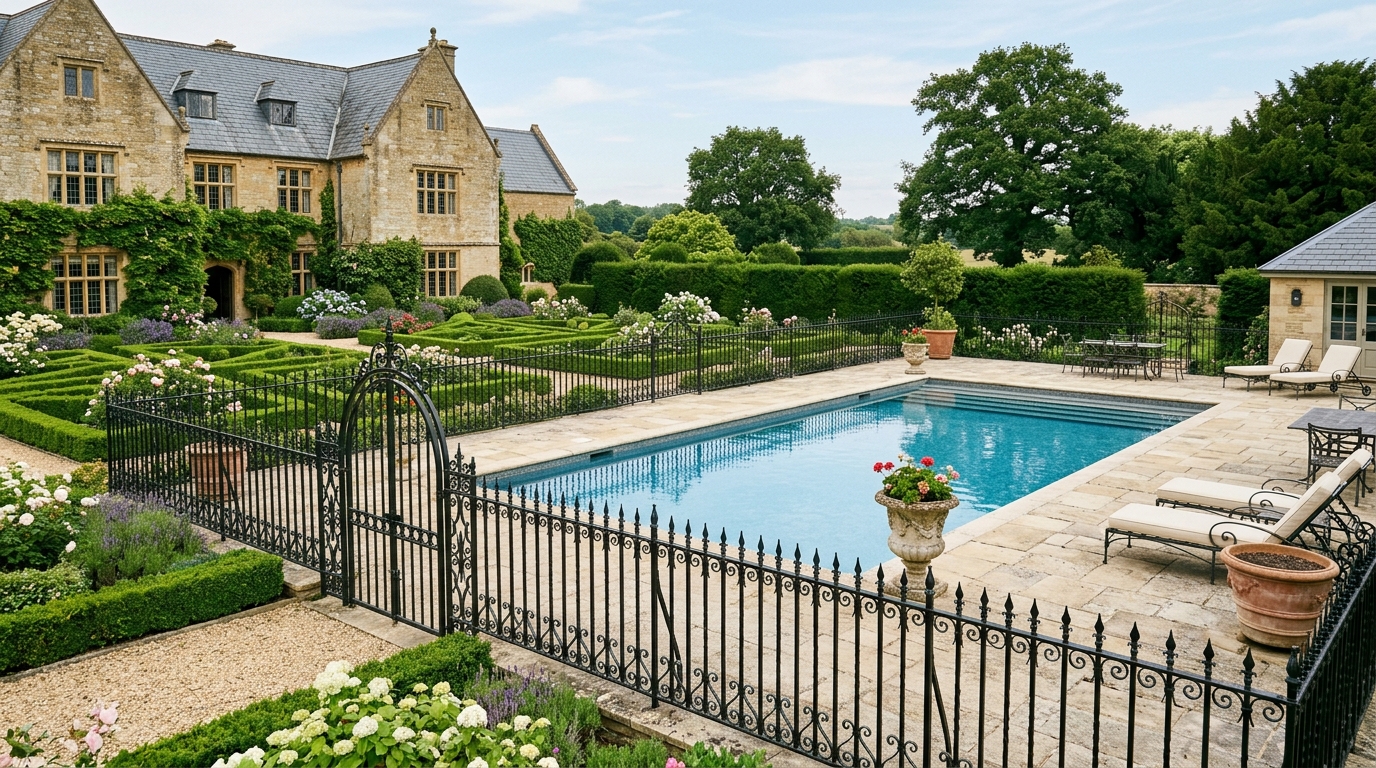
Aluminum is the most popular choice for pool fencing and the reasons are simple. It doesn’t rust, it doesn’t rot, it stands up to Oklahoma summers without fading badly, and it needs almost no maintenance except for an occasional rinse. Available in several styles and heights, it easily meets safety codes and looks neat without being flashy. It is the practical default for most homeowners.
Vinyl Pool Fence
Vinyl holds up well near water, doesn’t splinter and cleans easily. It’s a solid mid-range option for homeowners who want a private pool area since it comes in solid panel styles that block the view from outside. The downside is that vinyl can become brittle in extreme heat over many years and repairs are harder than with aluminum since panels don’t bend, they crack.
Wood Pool Fence
Wood looks great around a pool, especially with the right landscaping. The problem is that constant exposure to moisture accelerates degradation quite a bit. Wood near a pool needs sealing, staining and checking for rot regularly. If you’re willing to do the upkeep, it can go on a long time. If you’re not, it’s an eyesore. Most pool owners end up wishing they had gone with a less maintenance-intensive option.
Chain Link Pool Fence
The cheapest option is chain link and it does the job as far as safety goes. Not the most attractive option but it is practical, durable and easy to install quickly. Works well for larger properties where covering lots of perimeter is the priority and budget is a concern. A vinyl-coated chain link fence looks noticeably better than bare galvanized and holds up well in wet environments.
Glass Pool Fence
Glass fencing is the premium option. It keeps the pool area visible from the house, looks modern and genuinely elevates the look of any backyard. The panels are tougher than they look and handle the weather well. The cost is significantly higher than aluminum or vinyl and cleaning the panels regularly is part of the deal. For homeowners who want the backyard to look like a resort, glass delivers. For everyone else, it’s probably more than needed.
Mesh Pool Fence
Mesh pool fences are popular with families with young children because they’re specifically designed as temporary or semi-permanent safety barriers. They’re removable, which is the main selling point. When the kids are older and the pool safety concern changes, the fence comes down. The tradeoff is that mesh doesn’t have the permanence or curb appeal of aluminum or glass.
How to Choose the Right Pool Fence for Your Backyard
Once you know what the options are the decision usually comes down to five things.
Safety and Height Requirements
Whatever you pick needs to meet Oklahoma pool fence codes. Four foot minimum height, self-closing, self-latching gates and spacing that prevents small children from getting through are the basics. Aluminum and vinyl both meet these requirements easily in standard configurations.
Durability and Weather Resistance
Oklahoma summers are hot and humid. That combination is hard on wood and can affect vinyl over many years. Aluminum and glass hold up the best in this climate. Chain link with a vinyl coating is also a solid performer in humid conditions.
Maintenance Requirements
If you want to do as little as possible to keep the fence looking good, aluminum is the answer. Rinse it down occasionally and that’s about it. Glass needs regular cleaning to stay looking clean. Wood needs the most attention. Be honest about how much upkeep you’re actually going to do before choosing a material that assumes you’ll stay on top of it.
Aesthetics and Curb Appeal
The fence is part of the backyard. It should fit the style of the house and the pool area rather than just being functional. Glass and aluminum work with modern homes. Wood suits traditional or rustic styles. Vinyl is flexible and comes in enough colors and styles to fit most properties. Drive around and look at what looks good in context rather than just picking based on a product photo.
Budget and Installation Cost
Mesh and chain link sit at the lower end of the cost range. Aluminum and vinyl sit in the middle. Glass sits at the top. Installation complexity also affects cost. A straight run of aluminum fence around a rectangular pool costs less to install than a glass panel system with custom cuts and hardware. Get a proper quote before deciding since material cost alone doesn’t tell the whole story.
Conclusion
For most Oklahoma homeowners, aluminum is the right place to start. It’s code-compliant, stands the heat, looks clean and requires almost no maintenance. Whatever way you’re leaning, getting it installed properly by someone who knows the local code requirements makes a bigger difference than most people think. When you’re ready to find out what is best for your exact yard, contact the Pool Fence OKC team and get a proper assessment before you buy anything.
Read More: How to Choose the Best Fencing Contractors in OKC for Your Property