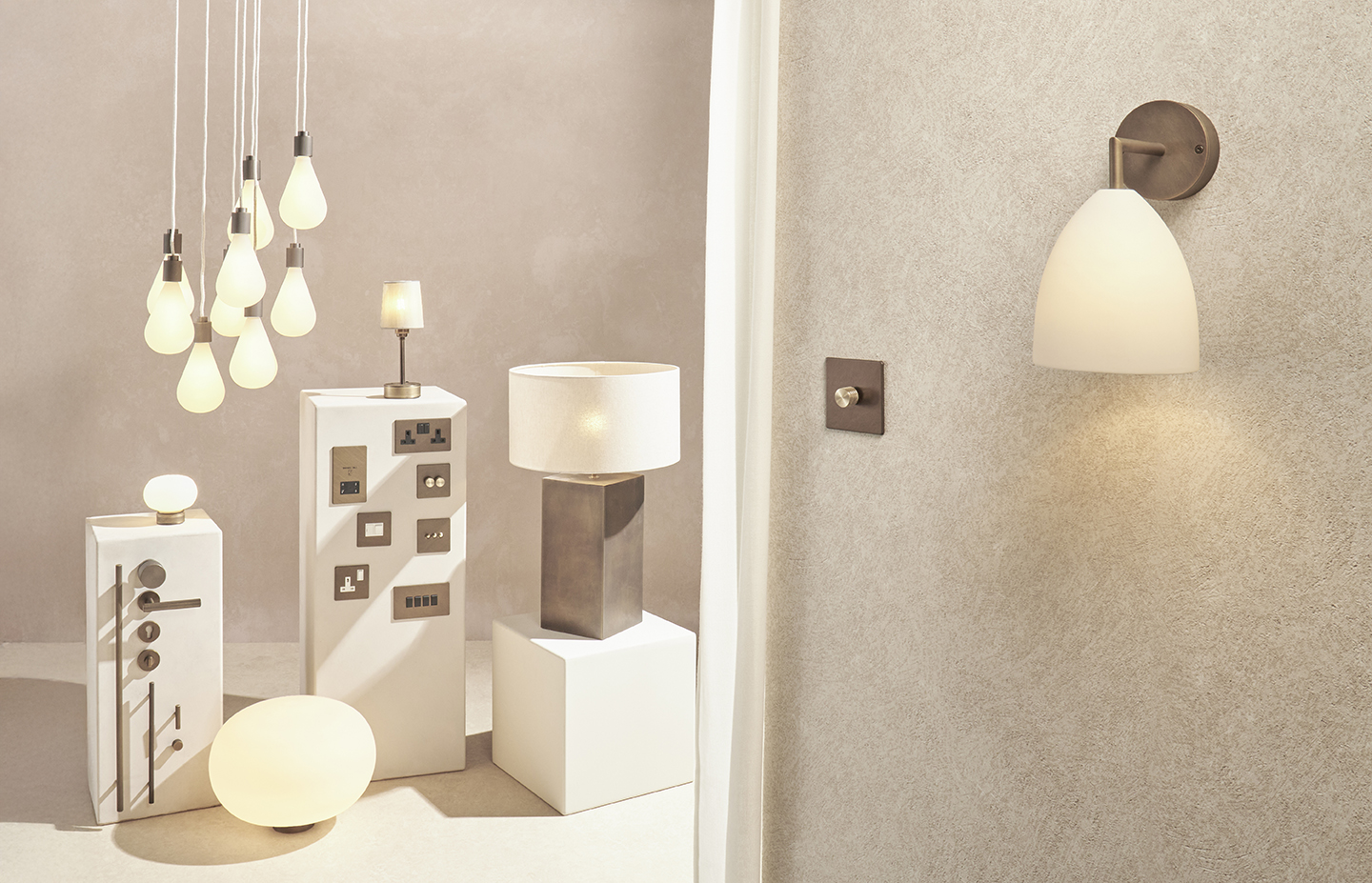
Aged brass introduces warmth without the bright shine associated with newly polished gold-toned metal. Its darker undertones, irregular patina, and muted surface can make hardware and fixtures feel settled into a room rather than freshly added. The challenge is restraint: too many brass elements can turn a subtle finish into an obvious theme.
A few well-placed details usually create a stronger result.
What Makes Aged Brass Different
Aged brass has a deeper, less reflective appearance than polished brass. Depending on the finish, it may show brown, bronze, black, or slightly uneven areas that mimic gradual oxidation.
Because the surface isn’t uniformly bright, it pairs easily with natural materials. Oak, walnut, marble, limestone, plaster, deep paint colors, and warm whites can all give aged brass enough contrast to register without making it flashy.
Patina Should Look Believable
Some finishes are living metals that change gradually, while others use a fixed coating designed to preserve a specific appearance. That difference affects maintenance and how evenly the finish ages.
Start With Hardware Instead of Large Surfaces
Cabinet handles and knobs are often the simplest place to test aged brass. They provide repeated warm points throughout a kitchen, bathroom, bedroom, or built-in without overwhelming the palette.
Material ideas from patio and exterior styling can be useful for seeing how warm metal behaves beside stone and timber. Indoors, the effect is similar: brass usually looks richer when surrounded by materials with visible grain or texture rather than a collection of glossy surfaces.
Door levers, hooks, shelf brackets, and small trims can extend the finish if more repetition is needed.
Pairing Aged Brass With Cabinetry and Stone
Deep green, navy, charcoal, off-white, and natural timber cabinetry can all provide a strong backdrop for aged brass. Pale stone keeps the combination lighter, while darker stone creates a more dramatic contrast.
Exploring interior material ideas can help when matching brass with the broader palette rather than choosing hardware in isolation. The metal should relate to nearby undertones; a strongly yellow finish may feel out of place beside cool gray stone, while a darker brown brass can bridge warm and neutral colors more easily.
| Brass Detail | Useful Location | Restraint Tip |
|---|---|---|
| Cabinet pulls | Kitchen or vanity | Repeat one profile |
| Wall sconce | Hall or bedside | Avoid too many gold accents |
| Shelf bracket | Built-in storage | Let timber remain dominant |
| Faucet | Bathroom or kitchen | Coordinate nearby hardware |
Let Textiles and Wood Soften the Metal
Warm metals look most natural when mixed with non-reflective materials. Linen, wool, painted plaster, cane, timber, and matte ceramics prevent the finish from reading as overly decorative.
A focus on inviting home arrangements also highlights why balance matters. An aged brass lamp beside a timber table and textured upholstery generally feels more relaxed than brass repeated across every frame, leg, handle, and decorative object.
Lighting affects the color as well. Warm bulbs deepen aged brass, while cooler lighting may emphasize green or brown undertones.
Where Aged Brass Starts Looking Overdone
The most common problem is matching every metallic element. Brass handles, faucets, lighting, mirrors, furniture legs, picture frames, switches, and accessories can make the finish feel like a decorating rule rather than a natural material choice.
Artificial patina can also vary sharply between brands. Two products both labeled “aged brass” may have completely different colors, so physical samples are valuable. Mixing one brass with black, bronze, or stainless steel can often make the room feel more collected and less coordinated.
Frequently Asked Questions
Does aged brass need to match every fixture?
No. Mixing finishes can produce a more natural room when each metal has a defined purpose. Repetition matters more than making every fixture identical.
What cabinet colors suit aged brass hardware?
Warm white, cream, dark green, navy, charcoal, and many natural wood tones pair comfortably with aged brass. Samples should be viewed beside the actual cabinetry because undertones differ between finishes.
Will aged brass change color over time?
Some unlacquered or living finishes can develop additional patina, while coated products may remain more consistent. The manufacturer’s care information should clarify how a specific product is expected to age.
Stop Before Every Detail Matches
Aged brass is most effective as a warm thread running through a room, not a finish applied to everything that can be metallic. Choose a few repeated details, place them beside natural or matte materials, and allow another finish to appear where appropriate. Restraint keeps the patina looking collected and architectural instead of overly coordinated.