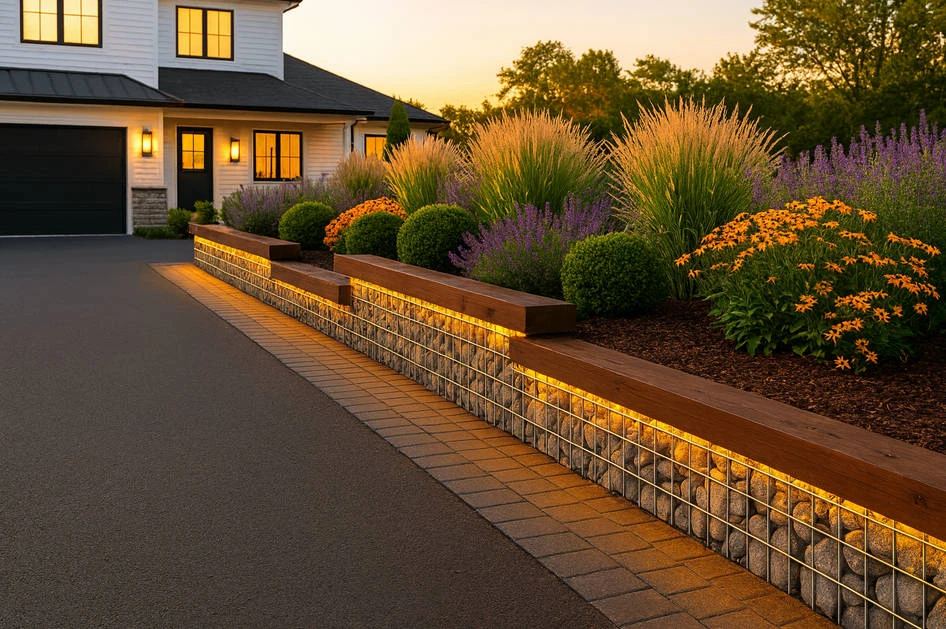
A defined driveway edge can make the entire front yard look more orderly while helping control how water, gravel, soil, and lawn meet the paved surface. The right treatment depends on driveway material, slope, drainage patterns, maintenance expectations, and the character of the property.
Good driveway edge ideas should solve practical problems first. A decorative border that traps runoff or becomes difficult to mow around can create more work than the cleaner appearance is worth.
Decide What the Edge Needs to Do
Some driveways need a border mainly for appearance. Others need help containing loose gravel, protecting lawn edges, managing runoff, or making the driving surface easier to distinguish.
Start by watching what happens during rain. Water crossing the driveway, pooling beside it, or washing soil away can reveal problems that shouldn’t be hidden beneath decorative edging.
Driveway width matters too. Thick borders can make a narrow driveway feel tighter, while a thin contrasting strip can define the edge without reducing its visual width.
Use Hard Edging With Restraint
Brick, stone, concrete units, and metal edging can all create clean lines. The material should be durable enough for its location, particularly where vehicle tires may occasionally contact the edge.
Examples of outdoor hardscape design can help show how driveway borders relate to patios, paths, planting beds, and other exterior surfaces. Repeating an existing material often looks calmer than introducing a completely new one only along the driveway.
Avoid raised details where passengers regularly step out of vehicles. A border may look attractive from the street but become annoying if it creates a constant trip point.
Soften the Line With Planting
A driveway doesn’t need a hard border from street to garage. Planting beds or low groundcovers can soften selected stretches while maintaining a clear transition between paving and landscape.
Studying comfortable exterior styling can provide ideas for balancing hard surfaces with softer materials. The driveway already creates a large visual area, so modest planting often has more impact than adding another continuous band of masonry.
| Edge Option | Best Use | Watch For |
|---|---|---|
| Flush pavers | Crisp formal border | Installation stability |
| Metal edging | Thin separation | Vehicle contact |
| Gravel strip | Drainage transition | Stone migration |
| Low planting | Softer appearance | Mature spread |
Plants should remain low enough to preserve visibility near the street and driveway exit. They also need enough setback to avoid being crushed by turning tires.
Let Drainage Shape the Detail
Edges can influence where water moves, which makes drainage more than an appearance issue. Property owners considering wider driveway and property planning should look at grading, runoff direction, nearby planting beds, and drainage points before installing a permanent border.
A narrow gravel strip can sometimes provide a useful transition between paving and soil, although it isn’t a substitute for a properly designed drainage system where substantial runoff exists.
Keep soil and mulch below the driveway surface where possible. Material piled against pavement can wash across the driveway during storms and create untidy sediment lines.
Where Driveway Edging Commonly Fails
Decorative borders often fail when they ignore vehicle movement. Corners and narrow entrances receive tire pressure that straight sections may never experience, so delicate materials placed there can shift or break.
Another mistake is creating a perfectly clean line but making lawn care harder. Raised borders may require extra trimming because a mower cannot pass cleanly over the edge.
Drainage can also be accidentally redirected toward garages, foundations, or neighboring areas. Appearance should never be the only factor when changing the way paved and unpaved surfaces meet.
Frequently Asked Questions
What is the easiest driveway edge to maintain?
Flush edging is often easier to mow beside than a raised border. The best option still depends on driveway material, surrounding landscape, soil movement, and whether the edge also needs to contain gravel or manage runoff.
Can gravel along a driveway improve drainage?
A gravel strip can help create a permeable transition and reduce muddy edges in some situations. It won’t correct major grading or drainage problems, so persistent pooling or heavy runoff may require a more deliberate solution.
Should driveway edging match walkway materials?
Matching isn’t essential, but repeating a stone, paver, or color already used elsewhere can create a more connected frontage. Too many unrelated materials may make a relatively simple driveway edge look visually busy.
Let Function Create the Clean Line
A successful driveway border should look intentional because it works well. Define the purpose of the edge, observe drainage before changing it, choose materials that tolerate vehicle activity, and keep maintenance simple. Cleaner lines usually come from controlling the transition between paving and landscape rather than adding the most noticeable border possible.