
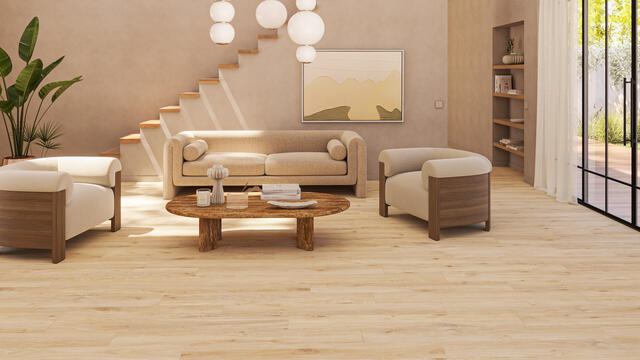
Are you thinking about upgrading your home with new floors? It is a big choice. Many people want the beauty of real wood. But you have two main paths. You can pick solid hardwood or engineered options. Both look great. However, there are key differences between solid and engineered hardwood flooring in Raleigh NC. Solid hardwood is a hard, natural timber that can be refinished several times over decades. On the contrary, engineered hardwood has a stable, veneer core that is moisture-resistant, making it suitable for basements and various installations. Although solid wood has a traditional lifespan, engineered wood has superior climate adaptability. Both materials offer a stunning wood look, though the selection depends on your environment and budget.
What Is Solid Hardwood Flooring?
Solid hardwood flooring is solid because it is composed of a single piece of wood. The planks are cut out of natural timber. Layers below are nonexistent. The whole board is wooden from the bottom to the top. Due to this design, solid hardwood has been used in households for a very long time. Some houses were constructed several decades ago, but they still have old-fashioned floors. And even after they are sanded and finished over again, they look good.
Common wood species used include:
- Oak
- Maple
- Cherry
- Walnut
- Hickory
Each wood type has a slightly different grain pattern. For example, oak flooring often shows strong grain lines. Maple looks smoother.
Characteristics of Solid Hardwood Flooring
- It is made from natural timber.
- You can refinish it many times.
- It adds high value to a home.
- It feels solid under your feet.
- It lasts for several decades.
For example, a home with a stable climate is perfect for solid oak. It will not move much.
What Is Engineered Hardwood Flooring?
Engineered hardwood flooring also uses real wood. But its structure is different. Instead of one solid piece, engineered boards are made from multiple layers. The top layer is a thin veneer of real hardwood. Beneath it are core layers made from plywood or high-density fiberboard. These layers are placed in opposite directions. This design improves strength and stability. Common thickness options include:
- 3/8 inch
- 1/2 inch
- 5/8 inch
- 3/4 inch
Since the core is stable, you can make these boards wide. Wide planks look great in open houses. Do you want floors that look like expensive oak but handle basement humidity? This is your best pick.
Why Choose Engineered Options
- Engineered hardwood flooring resists warping in wet spots.
- You can install it over concrete.
- It works well with radiant heat.
- It is often cheaper than solid wood.
- It uses resources more efficiently.
- It is stable in high humidity.
For instance, a kitchen floor with occasional spills is a good spot for engineered wood. It handles the damp air well.
Key Differences Between Engineered and Solid Hardwood Flooring
There are many factors to consider when comparing these two materials.
| Feature | Solid Hardwood | Engineered Hardwood |
| Construction and Composition | Made from one solid piece of wood. | Built with a real wood veneer over multiple core layers. |
| Durability and Lifespan | Can last many decades and be refinished multiple times. | Stable in changing climates but refinishing may be limited. |
| Stability and Moisture Resistance | Expands and contracts more with humidity. | Handles moisture changes better and resists warping. |
| Installation Methods and Flexibility | Usually installed with nail-down methods on wood subfloors. | Can be installed using nail-down, glue-down, or floating methods. |
| Suitable Applications | Works well in living rooms, bedrooms, and areas with controlled humidity. | Good for basements, kitchens, and spaces with higher moisture. |
| Refinishing and Longevity | Can be sanded and refinished many times. | Refinishing depends on veneer thickness and may be limited. |
| Cost and Value Over Time | Often costs more at first but may increase home resale value. | Usually lower upfront cost and installation can be simpler. |
| Appearance and Design Options | Traditional plank sizes and natural wood grain. | Allows wider and longer planks due to stable structure. |
| Environmental Considerations | Uses full timber for each plank. | Uses less hardwood per board which may conserve resources. |
Conclusion
Selecting the perfect hardwood flooring in Raleigh NC requires balancing your personal style with the specific needs of your home environment. Solid hardwood gives you that timeless feel and the ability to refinish again and again. It is for people who want floors that can last centuries. But it demands stable conditions and professional installation. Engineered offers more freedom. You can put it in basements and kitchens. You can install it yourself sometimes. It stays flat when humidity changes. The top is still real wood so it looks just as good. For most homeowners in Raleigh with its humidity swings engineered makes practical sense. But if you have a classic home with wood subfloors and stable air solid might call your name. Ask yourself where you want wood. Ask yourself about moisture. Ask yourself about budget. The right answer comes from your specific situation. Both choices give you beautiful real wood floors. Both add warmth and value. Now you know the difference so you can pick with confidence.


